Pagine

Showing posts with label games. Show all posts

Thursday, 7 January 2016

Square Enix Tech Demo for DirectX 12 WITCH CHAPTER 0 (Final Fantasy XV)


New Square Enix real-time DirectX 12 Tech Demo 

Source: arstechnica.com

Final Fantasy maker and tech-demo master Square Enix unveiled a doozie of a demo at Microsoft's 2015 Build conference. Titled Witch Chapter 0 [cry], the demo showcased a range of DirectX 12 technical and processing wizardries to create a real-time animation on par with pre-rendered cut scenes and movies.
Update: We now have some delicious full-resolution screenshots of the demo, which you can check out at the end of the post.
During the demo (which you can view below), Microsoft's Steve Guggenheimer explained each scene contained around 63 million polygons, which is supposedly up to 12-times more than Square Enix managed to render in its Agni’s PhilosophyDirectX 11 demo back in 2012. Running 63 million polygons with high-resolution textures—8K by 8K in this case—is no small feat. By comparison, Star Citizen's biggest carrier ships run up to around seven million polygons, while Ryse's protagonist Marius was made up of 85K polygons on the Xbox One.
One of the most impressive moments in the demo is when Guggenheimer zooms in to the character model, revealing an immense amount of detail right up to the individual pores on her skin. The character's hair was also revealed to be made up of individual polygons rendered with over 50 shaders and not the less expensive surface mapping technique that's commonly used to create features such as hair.


Saturday, 17 January 2015

Tuesday, 25 November 2014

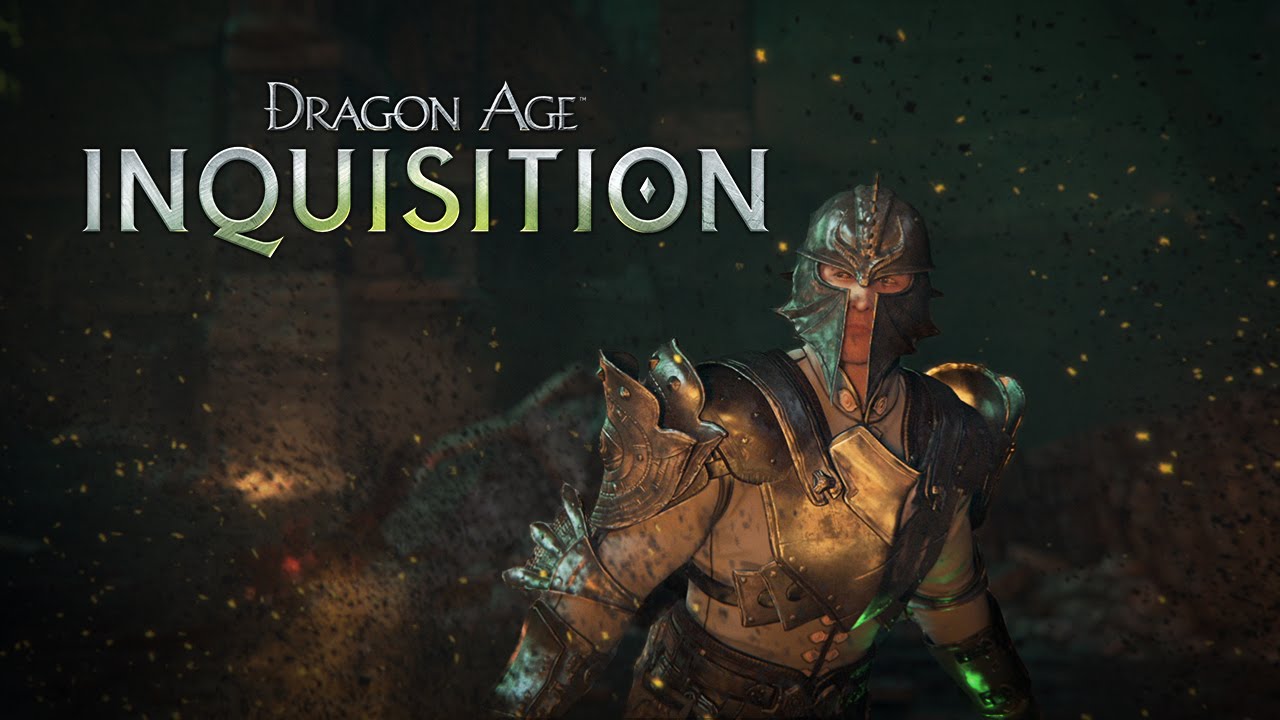
DRAGON AGE™: INQUISITION Official Trailer – The Breach - [2014]

A cataclysmic event Plunges the land of Thedas into turmoil. Dragons darken the sky, casting a shadow over lands on the brink of chaos. Mages break into all-out war against the oppressive templars. Nations rise against one another. It falls to you and your allies to restore order as you lead the Inquisition and hunt down the agents of chaos.

Explore, lead, and battle: Tough choices define your experience, and even one decision can change the course of what's to come.

What does it mean to pierce the Veil, that which separates our world from the realm of dreams and demons? For the average man and woman, it is a frightening thought to consider just how fragile this separation actually is. The Veil is not a physical curtain, not a structure limited to a particular place—it is everywhere. It is in their home, in the streets where they walk, in farmers' fields as well as remote mountain vales. At any moment it could be torn to shreds, allowing demons and other horrors to flood into our world like water through a burst dam. Known lore tells us that small rifts can be sealed... but what about a large one? What if some catastrophic magical event created a rift so large and horrific, it weakened the integrity of the Veil as a whole? Such a "breach" would threaten our entire world, turning concerns about occasional demonic intrusion into a charming anecdote compared to the monsters we would then face. If there is anything to be done, any reason we should look at magic with fear, it is for that possibility more than any other.
- From The True Threat of Magic by Lady Seeker Alandra Vael

Dragon Age: Inquisition, the third main game in BioWare's Dragon Age series, features a wide-array of characters.
The player fills the role of "the Inquisitor", leader of the re-established Theodosian "Inquisition", setting out to stop the demons that that have invaded the world of Thedas. The Inquisitor, whose race and gender is chosen by the player, can be accompanied by several "companions", or party members, who also join the Inquisition. Several characters, such as Morrigan and Leliana, return from previous games in the series, and two companions—Varric and Cassandra—both appeared in the second game (Varric being the only returning companion). Nine companions appear in all: Cassandra, Varric, Vivienne, Sera, Iron Bull, Solas, Blackwall, Dorian, and Cole.

Concept and creation

The creation process for Inquisition '​s characters each began with a concept artist, who was supplied with a very short blurb by the writers, rather than being written in advance. This was done in order to keep the concept artists from always having to "play catch-up" and make the process more collaborative.[1] For Inquisition, they wanted the characters to be more recognizable, and BioWare stated they preferred "realistic" characters over "the embodiment of perfection".[1] In deciding the cast for their games, Mike Laidlaw commented that BioWare looks at its major themes, and uses the party members to help pose "high-level questions" to the player and allow them to humanise issues.[1] BioWare tries to create a party dynamic.[1] Mark Darrah, the game's executive producer, noted that generally they tried to balance the characters between the classes, genders, romance options, and other things.[2]
Several characters from previous Dragon Age games return in Inquisition. It was important that any returning characters made sense.[1] Darrah commented that they were unlikely to reuse any previous romance options as companions due to the "baggage" that comes with them, though they could appear in cameos. He gave one reason that a character might return is an incomplete arc, pointing to Isabela's return in Dragon Age II.[2]
The characters were made before deciding who the romance options will be, and how many options there are; this is in order to ensure the characters are built-up and "real" first.[3] The developers try to balanced making the romances nuanced while not spending too much time developing "essentially optional" content.[3] The romances in Inquisition tried to explore new ground rather than repeat narratives seen in earlier romances.[3] Unlike previous games, Inquisition is said to favour event-driven content over approval ratings.[3][4] Romances can vary between falling for heated rival or "fooling around with a friend", depending on the player's choices, in addition to the more traditional route of falling in love.[5][6] The sex scenes in Inquisition are intended to be more "mature and tasteful", with cinematic director Jonathan Perry noting that controversy wasn't just a matter of concern, but also a limit on budget and the expense of animation fidelity. The developers wanted to focus not on the sex itself, but rather on that it was "the culmination of spending a lot of time with a character and getting to know them".[7]
Unlike the previous Dragon Age games, no DLC companion is planned for the game. Creative director Mike Laidlaw commented how due to the nature of their companions part of the DLC companion had to be on the disc, and some controversy was caused by players believing they were paying for companions they already owned.[8][9] Inquisitionfeatures nine companions in all.[8][9]
To help cosplayers, fan-artists, and others, BioWare is releasing character reference kits that detail their costumes.[10][11] The first one released was Morrigan.[11]

The Inquisitor

Voiced by: Harry Hadden-Paton and Alix Wilton Regan (British accents); Jon Curry and Sumalee Montano (American accents)[12]
The player character of the game, the Inquisitor is the sole survivor when a Fade tear erupts over a peace meeting between leaders of the Chantry and the mage rebellion. After this event, the character is placed head of the new Inquisition, and tasked with stopping the Fade tears and investigating their source. The Inquisitor is customisable, with the player given the choice over their gender, class (mage, rogue or warrior), race, and voice set. Most of their responses are controlled by the player through a dialogue wheel.
The Inquisitor has two different voices for each gender, with the choice between either a British or an American accent.[17] Alix Wilton Regan, provider of the Inquisitor's British female accent, believed there should be a sense of "strength, authority" to the Inquisitor, and so used a more "chesty" voice instead of more high and in the throat. Regan has said she is proud to be voicing a female protagonist for BioWare, focusing on the importance of inclusion.[18]With the Dragon Age series, developers wished to focus more on the world than build an arc around a single protagonist.[2][13]Mark Darrah noted how Hawke, the protagonist of Dragon Age II, was "really a leaf in the wind", and contrasted them against the Inquisitor, acting on the world instead of reacting to the world "pushing down on you".[2][13] Although BioWare originally stated that the Inquisitor would be human-only, it was later announced that the ability to choose your race, an option available in Origins, would return.[14] In addition to being able to be a human, dwarf or elf, Inquisition also introduces the option for the player to make their Inquisitor a "Qunari", a large horned race.[15] The developers wanted there to be some sort of significant impact to your choice of player, both from characters and the storyline.[16]
IGN's Mitch Dyer called the ability to play as a Qunari one of the "6 most exceptional things" he'd seen in Inquisition, also taking interest in the ability to play as a female Qunari partly due to it being their first appearance.[19] Matt Bertz of Game Informer was also glad to be able to play as a Qunari, believing "[t]he more playable races, the better in my mind".[15] Also writing for Game Informer, Kimberley Wallace called the player's "reach" as Inquisitor one of Inquisition '​s "striking features", saying "Your character has so much power over where the story goes and how events will play out, and part of the fun is deciding what type of leader you want to be."[20]


Saturday, 15 November 2014

FF VII - Cid Highwind Character Introduction + Cid Highwind Theme Rock version (Guitar)


Cid Highwind (シド・ハイウインド Shido Haiuindo) is an airship pilot and the most uncouth of the main characters, constantly swearing, losing his temper[36] and smoking cigarettes. In Final Fantasy VII, Cid is encountered in Rocket Town, where it is revealed he had been part of Shinra's space program and was set to be the first man in outer space. During the launch, however, an engineer named Shera defied his orders and stayed behind to double-check the rocket's oxygen tanks, leading Cid to abort the mission to save her life. Shinra subsequently concluded that space exploration was not financially viable, after discovering that Mako energy was a far more profitable venture, and they withdrew funding from the project altogether.[37] Cid blamed Shera for destroying his dreams to go to space, and she devoted herself to doing whatever she could to atone for her "mistake", even while Cid continued to verbally abuse her.[38] However, her concerns regarding the oxygen tanks were eventually proven to be correct when an explosion temporarily traps Cid during a later successful attempt to launch the rocket. Knowing this, Cid is able to forgive her,[39] and by the time of Dirge of Cerberus, they had married, and Cid had named his new airship after her. He was listed by IGN as one of the top 10 characters most needing a spin-off.[40]
 Cid also appears in Before Crisis and in Advent Children, where he briefly rejoins the party to fight against Bahamut SIN. In Dirge of Cerberus, he aids the World Regenesis Organization in launching an attack on Deepground headquarters, and later in fighting Omega WEAPON. Outside of the Compilation of Final Fantasy VII, he appears in Kingdom Hearts, Kingdom Hearts: Chain of Memories, Kingdom Hearts II and Kingdom Hearts coded. He is voiced in Japanese by Kazuhiro Yamaji[41] and in English by Chris Edgerly.[29]

Wednesday, 29 October 2014

League of Legends - Cinematic Trailer - A New Dawn (HD)


League of Legends (LoL) is a multiplayer online battle arena video game developed and published by Riot Games for Microsoft Windows[1] and Mac OS X, inspired by the mod Defense of the Ancients[2] for the video game Warcraft III: The Frozen Throne. It is afree-to-play game, supported by micro-transactions. The game was first announced on October 7, 2008, and released on October 27, 2009.[3] League of Legends was generally well received at release, and has grown in popularity in the years since. According to a 2012 Forbes article, League of Legends was the most played PC game in North America and Europe in terms of the number of hours played.[4] As of January 2014, over 67 million people play League of Legends per month, 27 million per day, and over 7.5 million concurrently during peak hours.[5]
In League of Legends, players assume the role of a character, called a "champion", with unique abilities, battling with a team against other player or computer-controlled champions. In the most popular game modes, each team's goal is to destroy the opposing team's nexus, a building which lies at the heart of a base protected by defensive structures. Each League of Legends game is discrete, with all champions starting off each game fairly weak and progressing by accumulating gold and experience over the course of the game.[6]
League of Legends has spawned a large, active competitive scene. In North America and Europe, Riot Games organizes the League of Legends Championship Series, which consists of 8 professional teams in each continent. Similar regional competitions exist in China, Korea, Taiwan and Southeast Asia. These regional competitions culminate with the annual League of Legends World Championships, which in 2013 had a grand prize of $1 million and attracted 32 million viewers online.[7]

Tuesday, 28 October 2014

Child of Light trailers [UK] - [Ubisoft Montreal] - [2014]


Official website: childoflight.ubi.com

Child of Light is a platforming role-playing video game developed by Ubisoft Montreal and published by Ubisoft. The game puts players in the shoes of Aurora, a child stolen from her home, who, in her quest to return, must bring back the sun, the moon and the stars held captive by the mysterious Queen of the Night.
It was released on Microsoft WindowsPlayStation 3PlayStation 4Wii UXbox 360 and Xbox One in April 2014, and was released on PlayStation Vita in July 2014. It is powered by UbiArt Framework, an in-house engine by Ubisoft previously used for Rayman Origins and its sequel, Rayman Legends.
Child of Light centers on Aurora, a girl from 1895 Austria who contracts a physical ailment that kills her. A protection spell cast by her mother causes Aurora to wake up on an altar in the mythical land of Lemuria. Lemuria has had its sun, moon and stars stolen by the Dark Queen, Umbra. Aurora is tasked with recovering the celestial bodies and ultimately reuniting with her father, who is a duke.[2]Helped by her playable companion Igniculus the firefly and several unlikely allies, Aurora will face her darkest fears in this modern take on a coming-of-age story.[3]
Gameplay is described as having attributes of a side-scroller with RPG elements such as leveling-up to increase stats over time.[4] Battles with enemies utilize a system similar to the Active Time Battle system found in games like the Final Fantasy series and Grandia.[5]
Initially revealed at GDC Europe 2013 by Patrick Plourde, Child of Light is said to be inspired by Studio Ghibli and Yoshitaka Amano in its art style, and in presentation similar to games like Vagrant StoryFinal Fantasy VIII and Limbo.[4]
Most of the core creative team is formed of people who worked on Far Cry 3; both games share a similar upgrade skill tree.
Child of Light received positive reviews from critics. Aggregating review websites Game Rankings and Metacritic gave the PlayStation 3 version 90.00% and 89/100,[6][12] the Wii U version 84.29% and 83/100,[7][13] the PlayStation 4 version 83.33% and 81/100,[8][15] the Xbox One version 82.00% and 82/100,[9][14] the Xbox 360 version 80.00% and 74/100[10][17] and the PC version 76.29% and 76/100.[11][16]
Vince Ingenito of IGN gave it a 9.3/10, praising the combat system and visual style, although he also said that the rhyming felt forced.[21] Chris Carter of Destructoid gave it an 8.5/10, calling the combat system "straightforward, yet fun" and praised the story.[18] GameZone's Matt Liebl gave the PC version a 9.5/10, stating "Child of Light isn’t the type of game we’re used to from Ubisoft, but it’s the type of game this industry needs. It’s hard not to look at the game and admire its beauty, but underneath the gorgeous visuals is a thought-provoking story that’ll draw you in."[19]
Child of Light is praised for its (simple) battle system that grants diverse battles with many different monsters.[22][23]
IGN describes the game's multiplayer experience as being co-operative, and featuring Igniculus, a blue orb character who can help out Aurora during battle.[5]

Rule of Rose (ルールオブローズ, Rūru obu Rōzu) - Opening video - [2006]


Rule of Rose (ルールオブローズ, Rūru obu Rōzu) is a survival horror video game for the PlayStation 2. The game was developed by Punchline and released in 2006. Set in England, 1930, the plot revolves around a nineteen-year-old girl named Jennifer, who becomes trapped in a world ruled by young girls who have established a class hierarchy called the Red Crayon Aristocrats. The game has been compared to survival horror games Silent Hill and Haunting Ground, due to the psychological horror used throughout and because the main character is accompanied by a canine companion. Rule of Rose garnered mixed reviews from many publications upon its release. The game was also the subject of a moderate amount of controversy due to its use of violence and sexuality amongst some of its underage, female characters.


Thursday, 23 October 2014

Musashiden II: Blade Master (武蔵伝II ブレイドマスター Musashiden Tsū Bureido Masutā) - INTRO - [Hiroyuki Imaishi]

Intro directed by Hiroyuki Imaishi


Musashi: Samurai Legend, known in Japan as Musashiden II: Blade Master (武蔵伝II ブレイドマスター Musashiden Tsū Bureido Masutā, lit. "The Legend of Musashi II: Blade Master"), is a third-person action game developed and published by Square Enix in 2005 for Sony's PlayStation 2. Much like its predecessor, Brave Fencer Musashi, the game involves real-time combat in a 3D environment, and character designs by Tetsuya Nomura.
The game was released in North America, Japan and Europe. Strangely, while the game is not referenced on the Australian PlayStation site[2] nor on the OFLC site,[3] the game was indeed released in Australia, printed with an OFLC "Parental Guidance" (PG) rating.
The gameplay in Musashi consists almost entirely of action segments where the player is confronted with foes and various other obstacles.


Monday, 20 October 2014

The Elder Scrolls Online - All Cinematic Trailers -


The Elder Scrolls Online is a massively multiplayer online role-playing video game developed by ZeniMax Online Studios and released on April 4, 2014 for Microsoft Windows and OS X. The PlayStation 4 and Xbox One versions were originally set to be released in June 2014,[4] but in May 2014, a six-month delay was announced, with the release of these versions now expected in late 2014 or early 2015.[5] It is a part of The Elder Scrolls video game franchise, of which it is the first open-ended multiplayer installment. It was announced on May 3, 2012 in an exclusive reveal by Game Informer and formally revealed in the same month's issue of the magazine.[1] Elder Scrolls Online was released on Steam on July 17, 2014.[6]

Gameplay


Upon creating a character, players have access to four classes: Dragon Knight, Templar, Sorcerer, and Nightblade. As in previousThe Elder Scrolls titles, gameplay is mostly nonlinear,[7] with a mixture of quests, random events, and free-roaming exploration of the world.[8] The game does not provide a mode for single-player offline play, although the developers have stated that there will be "plenty of content" designed to accommodate players who prefer to play solo.[9]

Setting

As with other games in The Elder Scrolls franchise, the game is set in the continent of Tamriel and features a storyline indirectly connected with the other games. The game is set a millennium before the events of The Elder Scrolls V: Skyrim and around 800 years before The Elder Scrolls III: Morrowind and The Elder Scrolls IV: Oblivion, with the Daedric Prince Molag Bal appearing as the main antagonist as he attempts to meld the plane of Mundus with his realm of Coldharbour.[1]
Most of the continent of Tamriel is available in the game, although much of it is locked off for expansion content. Players have the opportunity to join any of the three factions warring over the throne of the Emperor of Tamriel:[1] the First Aldmeri Dominion (represented by an eagle), composed of the Altmer (High Elf), Bosmer (Wood Elf), and Khajiit races; the Daggerfall Covenant (represented by a lion), composed of the Bretons, Redguard, and Orsimer (Orcs); and the Ebonheart Pact (represented by a dragon), composed of the Nord, Dunmer (Dark Elf), and Argonian races. Players may also unlock an additional race, Imperial, which may be a part of any of the three factions. Pre-ordered copies of the game include the "Explorers' Pack", which allows all races to be played in each of the factions.

Development

The Elder Scrolls Online had been in development for 5 years prior to its announcement in May 2012.[1] It is the first project for ZeniMax Online Studios, which was formed in 2007. Matt Firor, studio lead at ZeniMax Online, is also the director of The Elder Scrolls Online.[2]
While rumors of a massively multiplayer The Elder Scrolls game had been circulating for years, accurate information about the game and its imminent May 2012 announcement was not leaked until March 2012, to online publication Tom's Guide by an anonymous industry source.[10] According to the leak, the game was scheduled to be shown at E3 2012in June and QuakeCon 2012 in August. On November 8, 2012, Bethesda released a video on YouTube called "An Introduction to The Elder Scrolls Online", in which the game's developers talk about the game's content and development.[11] Several actors were announced to voice the characters of The Elder Scrolls Online, among them John CleeseBill NighyKate BeckinsaleLynda CarterAlfred MolinaMichael GambonJennifer HaleMalcolm McDowell, and Peter Stormare.[12]
Beta sign-ups for The Elder Scrolls Online began on January 21, 2013, and continued for seven rounds until February 26.[13][14][15]
On June 2013, Sony announced that The Elder Scrolls Online would be available on PlayStation 4 at their E3 press conference. It was later clarified by Bethesda that it would also be available on Xbox One.[16] While players on PC and Mac play together, those on Xbox One and PlayStation 4 play only with others on the same platform.[17] In August 2013, at Gamescom, it was announced that The Elder Scrolls Online would have a monthly subscription fee upon release for all platforms.[18][19] Subscriptions can be purchased in 30-, 90-, and 180-day increments.[20] While it was announced in January 2014 that the game would not require a PlayStation Plus subscription to play online,[21] the Xbox One version will require an Xbox Live Gold subscription in addition to a The Elder Scrolls Online monthly subscription.[22] On May 8, 2014, Bethesda spoke about development of the console editions, announcing that the release date for the PlayStation 4 and Xbox One versions of the game would be delayed until the end of 2014. ZeniMax Online Studios announced that players who purchase The Elder Scrolls Online before the end of June 2014 will have the opportunity to transfer their characters from Windows or Mac to either console platform and receive a free 30-day subscription.[23]

Release

Shortly after the game's launch, it was reported that some players were unable to activate the 30-day complimentary game time included with their purchase until a subscription had been set up and—in "a strange state of affairs" and "most likely a mistake"—after a full month had been paid for.[24] A serious item duplication exploit was discovered that allowed players to gain huge fortunes, which was patched shortly after release.[25] ZeniMax later announced that they had permanently banned thousands of accounts because of the exploit.[26]The Elder Scrolls Online was released on April 4, 2014 for PC and Mac. Home console releases for the PlayStation 4 and Xbox One are scheduled for later in 2014 or early 2015.

Reception


The Elder Scrolls Online received mixed reviews upon release; the game has a weighted aggregate rating of 71.43% on Game Rankings, based on 44 reviews,[27] and 71/100 on Metacritic, based on 63 reviews.[28] PC Gamer gave the game a score of 68/100, writing that it is "an MMORPG of moderate scope with a few good ideas" but cautioning that "'okay' isn't good enough when you're facing down this much of a premium."[31]selling game in the United Kingdom for the week of April 5 for individual formats, and number two across all formats.[34]

The game had 772,000 subscribers in June 2014.[35]