Pagine

Showing posts with label cultura giapponese. Show all posts

Thursday, 22 December 2016

TOZAI - Centro Culturale Giapponese


tozai giappone 360 gradi images


Tozai è un centro culturale giapponese organizza molteplici attività legate al Giappone. 
Il centro culturale giapponese Tozai nasce nel lontano 2001, e sin dalla nascita ha trovato in Milano un ottimo punto di incontro tra la comunità italiana e quella giapponese. 
Ma cosa vuol dire Tozai? 
Tozai è l`unione di due parole giapponesi che esprime rispettivamente il concetto di Est ed Ovest.

Le abbiamo scelte perché' la nostra attività è rivolta allo scambio tra i due paesi. 

Il centro culturale giapponese, concentra maggiormente l'attenzione sulla lingua giapponese, primo passo necessario per poter comunicare e comprendere meglio la cultura del paese.
Ma la lingua è solo il primo passo, successivamente si potranno seguire tante altre attività, come il corso di scrittura giapponese, corso di shodo, corso di origami, corso di shibori, corso di kitpass e tanti altri.... 
Ami il Giappone e vuoi conoscerlo di più?

Sei già stato in Giappone e vuoi raccontare la tua esperienza?


                                                                                                     Vieni a conoscerci, ti aspettiamo!


Tuesday, 30 December 2014

Japanese Myths & Monsters - [The more unusual ...]


Hands down Japan has some of the weirdest myths in the world, from phantoms who lick your bathroom clean to raccoons with magical scrotum, from haunted umbrellas, to poems that kill anyone who recites them out loud. This video represents some of the more unusual legends and highlights why, in my opinion, Japan leads the world in horror.

Follow me on https://twitter.com/DelunaCafe
Or visit me at http://delunabooks.com/

  • Music: "The Secret Of Sound" by Psycraft 

Sunday, 21 December 2014

Japanese Ghosts, Monsters, Demons


Song credits

Henry Hall - hush hush hush here comes the bogey man

Maximum To Hormone - whats up people

Amano Tsukiko - Chou - Fatal frame 2 OST


The following is a list of demons, ghosts, yōkai, obake, yūrei and other legendary creatures, which are notable in Japanese folklore and mythology.

A


Tuesday, 9 December 2014

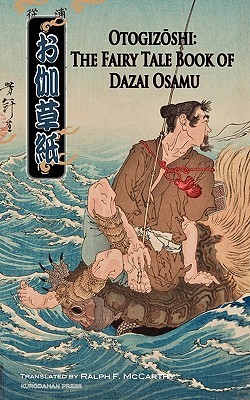
Otogizoshi: The Fairy Tale Book of Dazai Osamu - [1945]


12218696
by 
Dazai Osamu wrote The Fairy Tale Book (Otogizoshi) in the last months of the Pacific War. The traditional tales upon which Dazai's retellings are based are well known to every Japanese schoolchild, but this is no children's book. In Dazai's hands such stock characters as the kindhearted Oji-san to Oba-san ("Grandmother and Grandfather"), the mischievous tanuki badger, the fearsome Oni ogres, the greedy old man, the "tongue-cut" sparrow, and of course Urashima Taro (the Japanese Rip van Winkle) become complex individuals facing difficult and nuanced moral dilemmas. The resulting stories are thought-provoking, slyly subversive, and often hilarious.
In spite of the "gloom and doom" atmosphere always cited in reviews of The Setting Sun and the later No Longer Human, though, Dazai's cutting wit and rich humor are evident in the entire body of his work. His literature depicts the human condition in painfully blunt and realistic terms, but, like life itself, is often accompanied by a smile.

Osamu Dazai


born
in Tsugaru /Kanagi, Japan , June 19, 1909
died                                        June 13, 1948
gender                                   male
genre                                     Literature & Fiction

About this author
Osamu DAZAI (太宰 治) was the pen name of Shūji Tsushima. Although his father wanted him to be a politician, he insisted on being an author. When he applied to the Tokyo University French Literature Department, he was 20 years old. For most of his lifetime, he was a drug addict, an alcoholic and a sufferer of tubercolosis.

His last book Ningen Shikkaku (No Longer Human)(1948) is an authobiography. It documents his childhood, university years, and the time in which he acquires tuberculosis in detail.


In 1948, he committed suicide with his mistress.


Osamu Dazai is still one of the most popular authors in Japan.


Thursday, 25 September 2014

Ennosuke III: Kabuki Actor [1984]


This 35-minute documentary film is about Ennosuke Ichikawa, aka Ennosuke III, the third in a line of great Kabuki actors in Japan. Posted on December 9, 2013, Ennosuke's 74th birthday. We see him in the course of preparing for two major theatrical productions. The first is the 1979 revival of "Date no Juyaku," a five-hour play in which Ennosuke plays ten roles, both male and female, and has to switch back and forth, often in the middle of a scene! We also see him prepare a rarely performed classic play that's ten hours long and has only been revived in his lifetime by an amateur group in a rural village. Ennosuke travels there to consult with the amateurs and even recruits some of them to join his production in Tokyo. He tries to find ways to shorten the play and make it more accessible to modern audiences by including filmed segments. It's a fascinating process to watch. I was unable to determine the spelling of the title of this play, but a helpful viewer posted a comment below that identifies the title as: Oushuu Adachigahara, or: 奥州安達原. This film is narrated in English and was made by NHK.


Tuesday, 23 September 2014

Japanorama Season 03 Episode 03 J-Art (Japanese Pop Art) - [2 April 2007]

Japanorama is a series of documentaries presented by Jonathan Ross, exploring various facets of popular culture and trends of modern-day Japan. 
Each episode had a theme, around which he presented cultural phenomena, films, music, and art that exemplify facets of Japan. The series was colourful in both its creative use of subject matter, and its use of bright colours that helped accent the action on screen rather than distract from it. Subjects were separated by eye catches that often featured the artwork of Junko Mizuno. Ross hosted each episode in suits so bright and stylised they could have been stolen from ananime character.
Fans have credited the series for the care that both Ross and the BBC have placed in its production. Time was given to delve into each subject, and he was able to interview various figureheads of culture and industry, including Mamoru Oshii, Hayao Miyazaki, Takeshi Kitano, Takashi Miike with Takashi Murakamiand Sonny Chiba.
The theme song of the show was Kiyoshi no zundoko bushi by Kiyoshi Hikawa.
Japanorama consisted of three series, each with six episodes. The first series was shown on BBC Choice in 2002, while series 2 and 3 were shown on BBC Three in 2006[1] and 2007 respectively.[2]

Japanorama Season 03 Episode 03 J-Art (Japanese Pop Art)

Culture: Takashi Murakami's "Superflat" style of subversive characters derived from Manga and Anime, turned into merchandise
Culture: Gesai #10, Tokyo fair for young artists, 2006
Culture: Toast Girl uses household items for performance art
Culture: Yoshitomo Nara and his paintings with dark child-like figures
Culture: Toy-art, collectible figures created in limited editions
Culture: Tomohiro Yasui creates paper figures of wrestling robots
Culture: Hard Gay's paintings and sculpture, showing a giant anus
Culture: Keiichi Tanaami has created colorful psychedelic art since the late 1960s.


Monday, 22 September 2014

Bunraku - The Ancient Art of Japanese Puppetry

Bunraku (文楽), also known as Ningyō jōruri (人形浄瑠璃), is a form of traditional Japanese puppet theatre, founded in Osaka in 1684. Three kinds of performers take part in a bunraku performance: the Ningyōtsukai or Ningyōzukai (puppeteers), the Tayū (chanters) and shamisen musicians. Occasionally other instruments such as taiko drums will be used.
The most accurate term for the traditional puppet theater in Japan is ningyō jōruri(人形浄瑠璃?). The combination of chanting and shamisen playing is called jōruriand the Japanese word for puppet (or dolls, generally) is ningyō. it is used in many plays
Bunraku puppetry has been a documented traditional activity for Japanese for hundreds of years.[1]

Tuesday, 22 July 2014

Azuma Kabuki Musicians Nagauta Music 1954 (with liner notes)

Kabuki (歌舞伎) is a classical Japanese dance-drama. Kabuki theatre is known for the stylization of its drama and for the elaborate make-upworn by some of its performers.
The individual kanji, from left to right, mean sing (歌), dance (舞), andskill (伎). Kabuki is therefore sometimes translated as "the art of singing and dancing". These are, however, ateji characters which do not reflect actual etymology. The kanji of 'skill' generally refers to a performer in kabuki theatre. Since the word kabuki is believed to derive from the verb kabuku, meaning "to lean" or "to be out of the ordinary", kabukican be interpreted as "avant-garde" or "bizarre" theatre.[1] The expression kabukimono (歌舞伎者) referred originally to those who were bizarrely dressed and swaggered on a street.
                                                                                                                       Leggi l'intero documento ...


Wednesday, 16 July 2014

Scopriamo la figura di Jizo, protettore dei viaggiatori e dei bimbi - (articolo in versione integrale) - [animeclick.it]

Jizo apertura

Molti li hanno visti dal vero, altri solo in foto, ma queste piccole statue spesso vestite di rosso, quasi sempre poste lungo il ciglio della strada, sono certamente qualcosa che salta all'occhio e si imprime nella memoria del viaggiatore reale o virtuale come parte integrante del tipico paesaggio giapponese. Ma cosa sono, o meglio, chi rappresentano queste figure e perchè sono così diffuse?

Thursday, 10 July 2014

Sakura "Cherry Blossoms";Traditional Music of Japan, Classical Koto Music 日本の伝統音楽


A cover 

Lullaby of Takeda [Takeda No Komoriuta], Japanese Folk Song - The Red Birds [Akai Tori]

"Lullaby of Takeda", one of Beautiful Japanese Folk Songs, but in reality the lyrics of the song is including significant meanings, which is based on a sad forklore of a small girl, born at a very poor family in an isolated small village which is called "Takeda", located at current Fushimi-Ward, Kyoto Prefecture of Kansai Region.
One day she was forcibly put out to service for a rich family of a landlord to earn their keep, whose house was located at the next village over a mountain even though she was an infant, .
During the period of her bitter days, her dairy hard works carrying a small baby in her back always have reminded her of her family and sweet home with looking at the silhouette of the mountains in the direction of her homeland.
That is to say, such circumstances seem to have made her sing this song sadly in her mind, and which orally has been transmitted from people to people and changed to be a very beautiful lullaby across Kansai Region.


Song performed by Akai Tori [The Red birds], Japanese folk-song group.


Contents of Lyrics in English

Unwilling baby-sitting,
Thinking of days after mid-summer Bon[*] holiday,
Then flurry of cold snow continues,
And a baby's repeating cry.

Even coming Bon holiday, what is so joyful.
No clothes and no sash to attire.

The baby is so irritable to cry,
That baby's crying annoys me

Baby-sitting for a whole day,
That makes me getting so skinny

Wishing to get back home in a hurry across the border,
That's my parents' home which can be seen far away.

Bon[*];
Bon or Obon is a Japanese Buddhist custom to honor the deceased spirits of one's ancestors. This Buddhist custom has evolved into a family reunion holiday during which people return to ancestral family places and visit and clean their ancestors' graves, and when the spirits of ancestors are supposed to revisit the household altars.
It has been celebrated in Japan for more than 500 years and traditionally includes a dance, known as Bon-Odori, Mid-summer Dance Festival.
The Festival of Obon lasts for three days; however its starting date varies within different regions of Japan.


Wednesday, 9 July 2014

Thirty-six Views of Mount Fuji - Hokusai (1831-33)


Thirty-six Views of Mount Fuji (富嶽三十六景 Fugaku Sanjūrokkei) is an ukiyo-e series of large, color woodblock prints by the Japanese artist Katsushika Hokusai (1760–1849). The series depicts Mount Fuji in differing seasons and weather conditions from a variety of different places and distances. It actually consists of 46 prints created between 1826 and 1833. The first 36 were included in the original publication and, due to their popularity, ten more were added after the original publication.[1]
While Hokusai's Thirty-six Views of Mount Fuji is the most famous ukiyo-e series to focus on Mount Fuji, there are several other series with the same subject, includingHiroshige's Thirty-six Views of Mount Fuji and Hokusai's own later series One Hundred Views of Mount Fuji. Mount Fuji is a popular subject for Japanese art due to its cultural and religious significance. This belief can be traced to The Tale of the Bamboo Cutter, where a goddess deposits the elixir of life on the peak. As Henry Smith explains, "Thus from an early time, Mt. Fuji was seen as the source of the secret of immortality, a tradition that was at the heart of Hokusai's own obsession with the mountain."[2]
The most famous single image from the series is widely known in English as The Great Wave off Kanagawa (神奈川沖浪裏 Kanagawa-oki nami-ura?), although a more literal translation might be, "Off Kanagawa, the back (or underside) of a wave." It depicts three boats being threatened by a large wave while Mount Fuji rises in the background. While generally assumed to be a tsunami, the wave was probably intended to simply be a large ocean wave.
Each of the images was made through a process whereby an image drawn on paper was used to guide the cutting of a wood block. This block was then covered with ink and applied to paper to create the image (see Woodblock printing in Japan for further details). The complexity of Hokusai's images includes the wide range of colors he used, which required the use of a series of blocks for each of the colors used in the images.
A collection of Thirty-six Views of Mount Fuji prints contained in the wellness spa of the Costa Concordia was lost during the collision of the ship on January 13, 2012.[3]
All forty-six prints (the original thirty-six plus the ten additions) were featured in the exhibition "Hokusai: 36 Views of Mount Fuji" at the Freer Gallery of Art and the Arthur M. Sackler Gallery, the Smithsonian's museums of Asian art, in the spring of 2012.
-----------------

Queste suggestive stampe comprendono in realtà 46 vedute del Monte Fuji da diverse prospettive e stagioni (10 sono state aggiunte successivamente la pubblicazione) prodotte dal grande artista Katsushika Hokusai (1760-1849). Sono immagini molto armoniose e solenni, che mettono in primo piano il rapporto uomo-natura, il tutto incorniciato da un sapiente uso del blu di Prussia che contribuisce a dare alle xilografie un tono etereo e raffinato.


Musica: McCoy Tyner (1938), "Valley of Life", dall'album "Sahara" (1972).


Utagawa Hiroshige [1797-1858] - The Fifty-three Stations of the Tōkaidō


Utagawa Hiroshige (Japanese: 歌川 広重), also Andō Hiroshige (Japanese:安藤 広重; 1797 – 12 October 1858) was a Japanese ukiyo-e artist, considered the last great master of that tradition.
Hiroshige is best known for his landscapes, such as the series The Fifty-three Stations of the Tōkaidō and The Sixty-nine Stations of the Kiso Kaidō; and for his depictions of birds and flowers. The subjects of his work were atypical of the ukiyo-e genre, whose typical focus was on beautiful women, popular actors, and other scenes of the urban pleasure districts of Japan's Edo period (1603–1868). The popular Thirty-six Views of Mount Fuji series by Hokusai was a strong influence on Hiroshige's choice of subject, though Hiroshige's approach was more poetic and ambient than Hokusai's bolder, more formal prints.
For scholars and collectors, Hiroshige's death marked the beginning of a rapid decline in the ukiyo-e genre, especially in the face of the westernization that followed the Meiji Restoration of 1868. Hiroshige's work came to have a marked influence on Western painting towards the close of the 19th century as a part of the trend in Japonism. Western artists closely studied Hiroshige's compositions, and some, such as van Gogh, painted copies of Hiroshige's prints.

Shakuhachi Instrumental by 清虎(Kiyotora B Sekikawa) 
Arrangement by Dan Sekikawa and Macintosh.


Utagawa Hiroshige the "Nature's Master"

Woodblock prints by Kawase Hasui [ 川瀬 巴水, 1883-1957 ]

Kawase Hasui (川瀬 巴水, 1883 -- 1957) was a prominent Japanese painter of the late 19th and early 20th centuries, and one of the chief printmakers in the shin hanga ("new prints") movement.

For more information please visit the given link,http://en.wikipedia.org/wiki/Kawase_H...


Woodblock prints by Hiroshi Yoshida [1876-1950]


Hiroshi Yoshida (吉田 博 Yoshida Hiroshi?) (1876-1950) was a 20th century Japanese painter and woodblock print maker. He is regarded as one of the greatest artists of the shin hanga style, and is known especially for his excellent landscape prints. Yoshida travelled widely, and was particularly known for his images of non-Japanese subjects done in traditional Japanese woodblock style, including the Taj Mahal, the Swiss Alps, the Grand Canyon, and other National Parks in the USA.

For more information visit http://en.wikipedia.org/wiki/Hiroshi_...


Japanese Woodblock Printmaking [with Keizaburo Matsuzaki-san]


㋭Woodblock printing in Japan (Japanese: 木版画, moku hanga) is a technique best known for its use in the ukiyo-e artistic genre; however, it was also used very widely for printing books in the same period. Woodblock printing had been used in China for centuries to print books, long before the advent of movable type, but was only widely adopted in Japan surprisingly late, during the Edo period (1603-1867). Although similar to woodcut in western printmaking in some regards, the moku hanga technique differs in that it uses water-based inks—as opposed to western woodcut, which often uses oil-based inks. The Japanese water-based inks provide a wide range of vivid colors, glazes, and transparency.


㋭Wiki Link:


㋭Keizaburo Matsuzaki-san, the printer's Official Website: